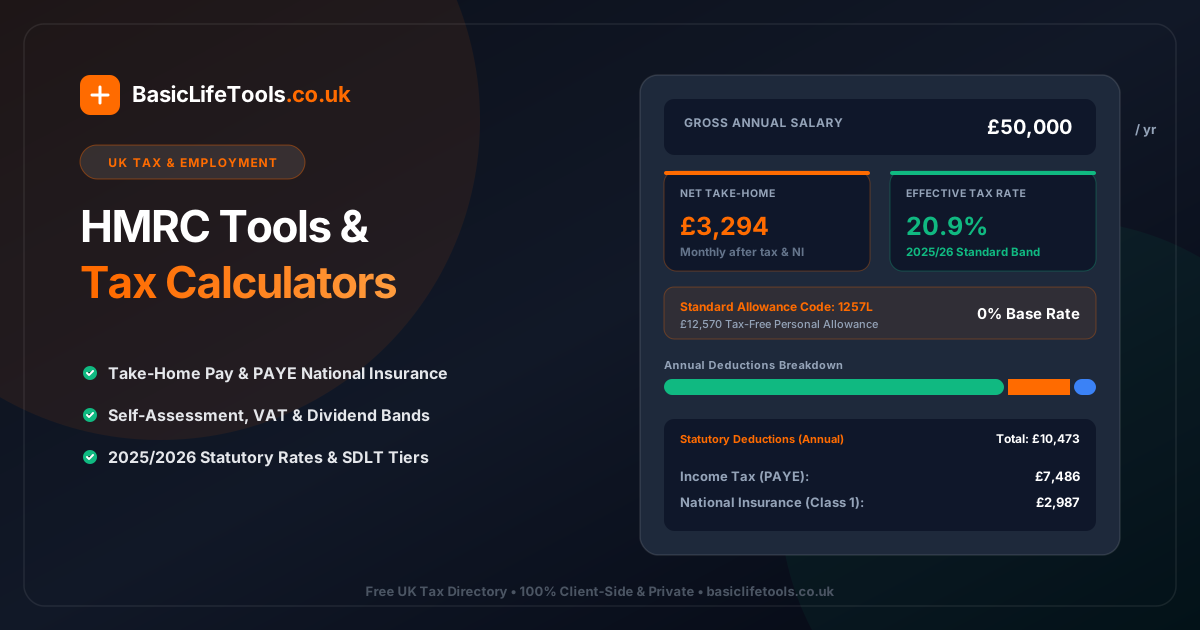
Quick Summary: Navigating official HM Revenue & Customs services often requires checking rates across multiple distinct systems. This hub breaks down official HMRC tools and calculators alongside fast client-side estimation utilities for take-home pay, VAT, dividends, and property taxes under current 2025/2026 rules.
Table of Contents
Directory of Core UK Tax & Finance Calculators
Use the tabs below to find the specific tool you need across employment income, property transactions, business taxes, and retirement allowances. All internal tools open directly on BasicLifeTools, while external links connect straight to official GOV.UK verification portals.
| Tax Category | Primary Utility | Focus Calculation | Direct Link |
|---|---|---|---|
| PAYE & Income | Take Home Pay Calculator[cite: 1, 2] | Net pay after Tax, NI, & pension | Open Tool (Internal) |
| Income Tax | Income Tax Calculator[cite: 1] | UK & Scottish marginal bands | Open Tool (Internal) |
| Sales Tax | UK VAT Calculator[cite: 1] | 20% Standard & 5% Reduced rates | Open Tool (Internal) |
| Dividends | Dividend Tax Calculator[cite: 1] | Director dividend tax liability | Open Tool (Internal) |
| Contracting | IR35 Deemed Tax Calculator[cite: 1] | Inside vs Outside IR35 retention | Open Tool (Internal) |
| Employment | Salary Sacrifice Calculator[cite: 1] | NI & pension tax efficiency | Open Tool (Internal) |
| Property (England/NI) | UK Stamp Duty Calculator (SDLT)[cite: 1] | Residential land tax bands | Open Tool (Internal) |
| Property (Wales) | Wales Land Transaction Tax (LTT)[cite: 1] | Welsh Revenue Authority tiers | Open Tool (Internal) |
| Official Portal | GOV.UK Tax Checker | Check PAYE code & allowances | Official Portal (External) |
| Official Self Assessment | HMRC Ready Reckoner | Self-employed tax estimation | Official Portal (External) |
Key 2025/2026 HMRC Statutory Baselines
Before running calculations, verify your figures against the statutory thresholds currently enforced by HMRC:
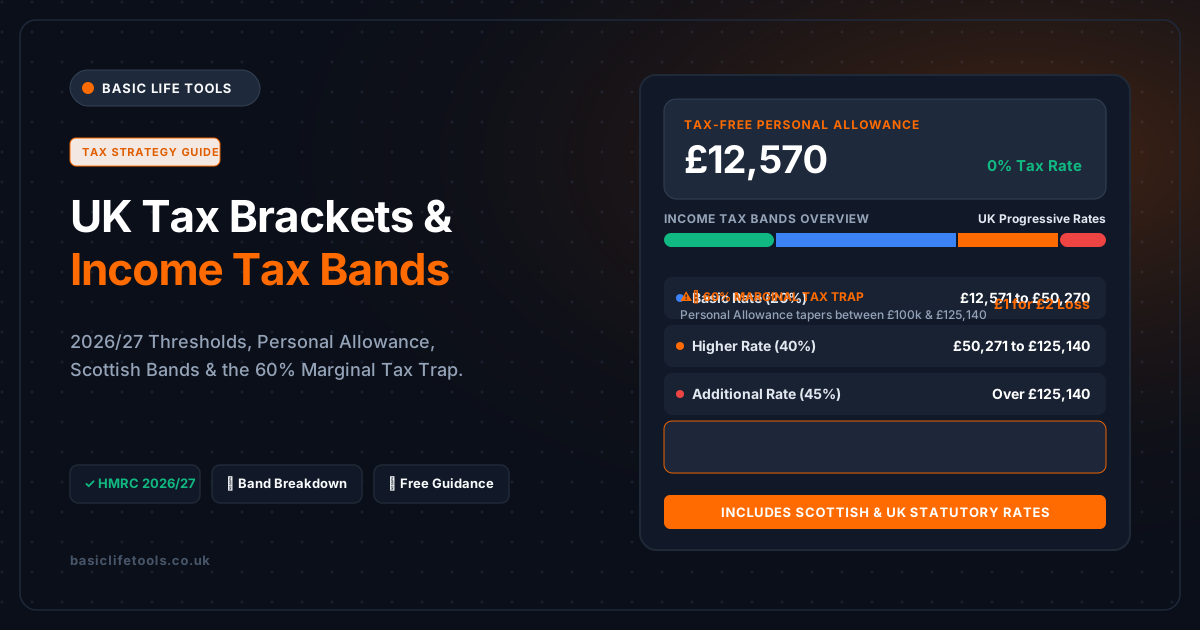
- Personal Allowance: £12,570 (0% Income Tax up to this amount)[cite: 1].
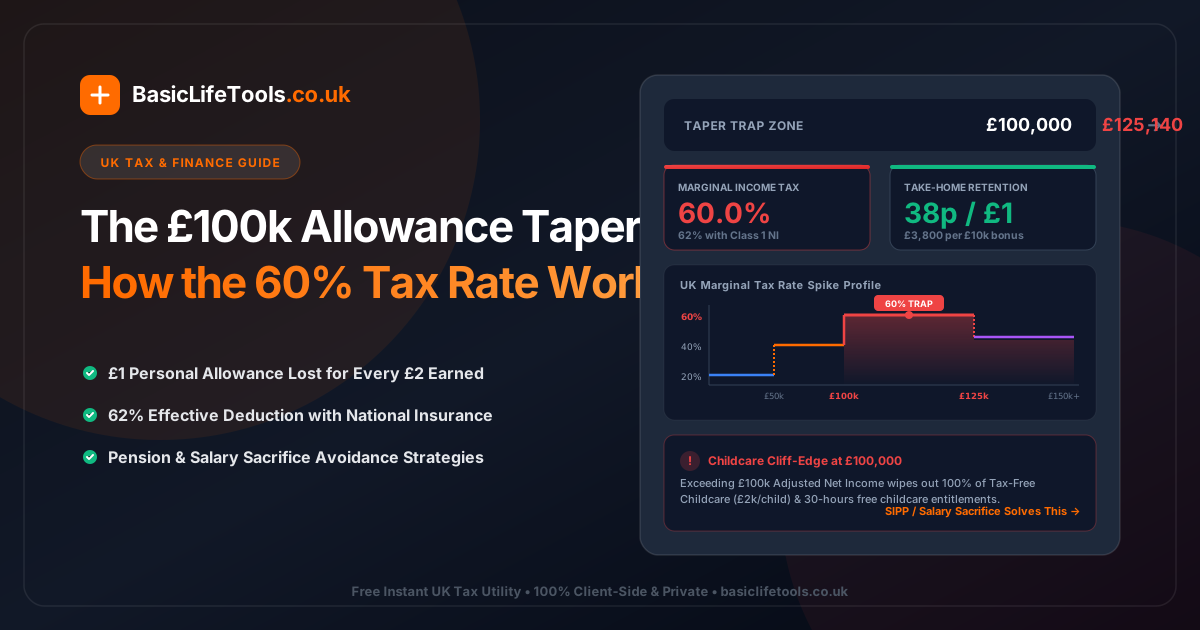
- Income Tax Taper Trap: The Personal Allowance reduces by £1 for every £2 earned above £100,000, creating an effective 60% tax rate between £100,000 and £125,140[cite: 1].
- Basic Rate Band (England, Wales, NI): 20% on earnings between £12,571 and £50,270[cite: 1].
- Higher Rate Band: 40% on earnings between £50,271 and £125,140[cite: 1].
- Additional Rate Band: 45% on earnings above £125,140[cite: 1].
- Employee National Insurance (Class 1): 8% on earnings between £12,570 and £50,270; 2% on earnings above £50,270[cite: 1].
- Standard VAT Rate: 20% (with a 5% reduced rate for eligible energy products and renovations)[cite: 1].
Step-by-Step: How to Estimate Your Annual PAYE Liability
- Establish Total Gross Income: Add your baseline contracted salary, overtime, and taxable benefits (e.g., medical cover or company car values).
- Apply Allowable Deductions: Deduct qualifying salary sacrifice arrangements (such as pension contributions or cycle-to-work schemes) to determine your adjusted net income.
- Calculate Tax Bands: Apply 0% to the first £12,570, 20% to income within the basic bracket, and 40%/45% to higher tiers.
- Determine National Insurance: Factor in Class 1 Primary NI contributions based on pay period thresholds.
- Cross-Check with Official Tools: Verify the output against the official GOV.UK PAYE Checker to ensure no unexpected tax code adjustments (such as underpaid tax from prior years) apply.
Official vs. Third-Party Calculators: When to Use Which
┌──────────────────────────────────────────────────────────┐
│             HMRC Digital Decision Flow                   │
└──────────────────────────────────────────────────────────┘
                            │
            Is an exact, binding tax return needed?
            ├── YES ──► File via official HMRC Online Services
            │           or commercial Self Assessment software.
            └── NO  ──► Use fast client-side calculators for:
                        • Quick scenario modeling (e.g. pay rises)
                        • Pension salary sacrifice planning
                        • Property purchase SDLT estimates
Official HMRC tools are necessary for filing Self Assessment returns, checking PAYE codes, or submitting claims directly. However, client-side tools like the Take Home Pay Calculator[cite: 1, 2] and Contractor vs Employee Calculator[cite: 1] provide real-time adjustments without requiring you to log in via Government Gateway.
Frequently Asked Questions
Why does my take-home pay differ from HMRC estimates?
Variations usually stem from non-standard tax codes (e.g., 1257L vs emergency codes like 1257 W1/M1), student loan repayment plans (Plan 1, 2, 4, or Postgraduate), or employer-specific pension schemes (Relief at Source vs Net Pay Arrangement).
How do I check if my tax code is correct?
Sign in to your Personal Tax Account on GOV.UK. This dashboard lets you check your current tax code, update estimated annual income, and view real-time employer submissions under Real Time Information (RTI).
Can I calculate Scottish Income Tax using standard HMRC tools?
Scottish taxpayers pay different income tax rates across Starter (19%), Basic (20%), Intermediate (21%), Higher (42%), Advanced (45%), and Top (48%) bands[cite: 4]. Use dedicated tools like our Income Tax Calculator[cite: 1] with the Scottish toggle selected, or check the Scottish Government Tax Guidance.